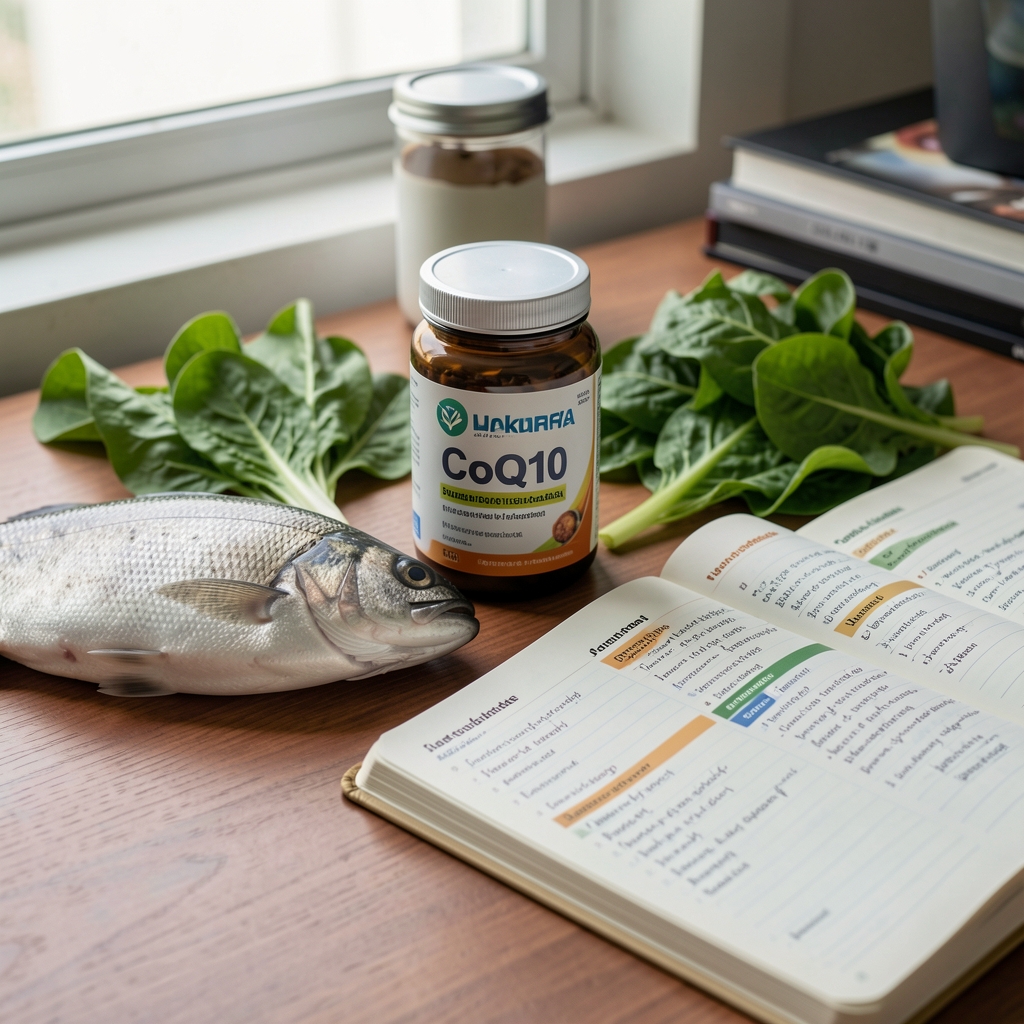
CoQ10 appears in many conversations about daily supplement routines, yet the most useful starting point is often modest: what is already on the plate, how the label is read, and where a new habit would sit inside an ordinary Jakarta week.
The ingredient beside the meal
A routine is easier to understand when an ingredient is considered with meals rather than as an isolated object. Fish, meat, vegetables, grains and cooking fats create a wider nutritional picture. A label may describe a serving, but the reader still needs to consider breakfast timing, workday appetite and the pattern of meals across several days.
For active men, this context matters because training, commuting and late work can change meal consistency. The editorial question is not whether a single addition carries the whole story. It is whether the story remains coherent when the ingredient sits beside food variety and a realistic movement routine.
Reading serving language
CoQ10 labels differ in form, amount and suggested timing. A careful reader notes the serving size, the stated form, whether the product is combined with other ingredients, and the manufacturer's own suggested use. None of these details are a promise about a personal outcome; they are simply what the label states, and treating them that way keeps a reader's expectations proportionate.
It is also worth noting how a product is packaged and stored, since humidity and temperature in a Jakarta household can affect a supplement over time in ways a label rarely mentions. Reading storage instructions alongside serving instructions is a small habit that tends to be overlooked.
Where the nutrient shows up in food
Public food composition references note that CoQ10 is present in modest amounts in foods such as organ meats, oily fish, whole grains and some vegetables, though amounts vary by source and preparation. This is useful context for readers who want to think about food variety alongside any supplement decision, rather than treating a supplement as a separate category from the rest of the diet.
| Common CoQ10 formats | Typical packaging | What the label usually states |
|---|---|---|
| Standalone capsule format | Bottle, blister strip | Serving amount, suggested daily use, storage note |
| Combined multi-ingredient format | Bottle with mixed actives listed | Full ingredient list, relative proportions |
| Softgel or oil-based format | Bottle, foil strip | Serving amount, carrier oil listed, storage note |
Building a realistic weekly pattern
- Note which meals are the most consistent across a typical week, since routines attach more easily to an existing habit than to a new one.
- Keep a short written log of what is taken and when, separate from any assumption about how it should feel.
- Revisit food variety once a month rather than daily, since a single day rarely reflects the broader pattern.
- Treat label information as a reference document to return to, not something read once and set aside.
- Read the full label once before the first use, including storage and serving notes.
- Decide on a consistent time of day that fits an existing meal, rather than a separate reminder.
- Record the start date in a simple note, useful later if a question about the routine comes up.
- Review the pattern after a few weeks against the original plan, adjusting for schedule changes rather than expected outcomes.
"The label tells you what is in the bottle and how the maker suggests using it. It does not tell you what your week looks like — that part is still yours to write down." — Ralen Journal editorial desk
Questions readers ask about this feature
Does this article recommend a specific CoQ10 product?
No. Ralen Journal does not endorse or rank individual products. The feature describes label language and food context so a reader can evaluate any product they already have in front of them.
Is this article a substitute for professional advice?
No. It is an editorial description of labelling and food patterns. Readers with a specific health question are encouraged to speak with a qualified professional rather than rely on this page alone.
Why does the article focus so much on food?
Because a supplement sits inside a wider diet, not apart from it. Describing food context is part of keeping the ingredient in proportion rather than treating it as the whole story.
A closing note on proportion
CoQ10 men Indonesia searches often lead to product pages before they lead to context. This feature tries to reverse that order: food first, label second, and a realistic weekly pattern last, so that any decision a reader makes sits on a fuller picture rather than a single claim on a package.