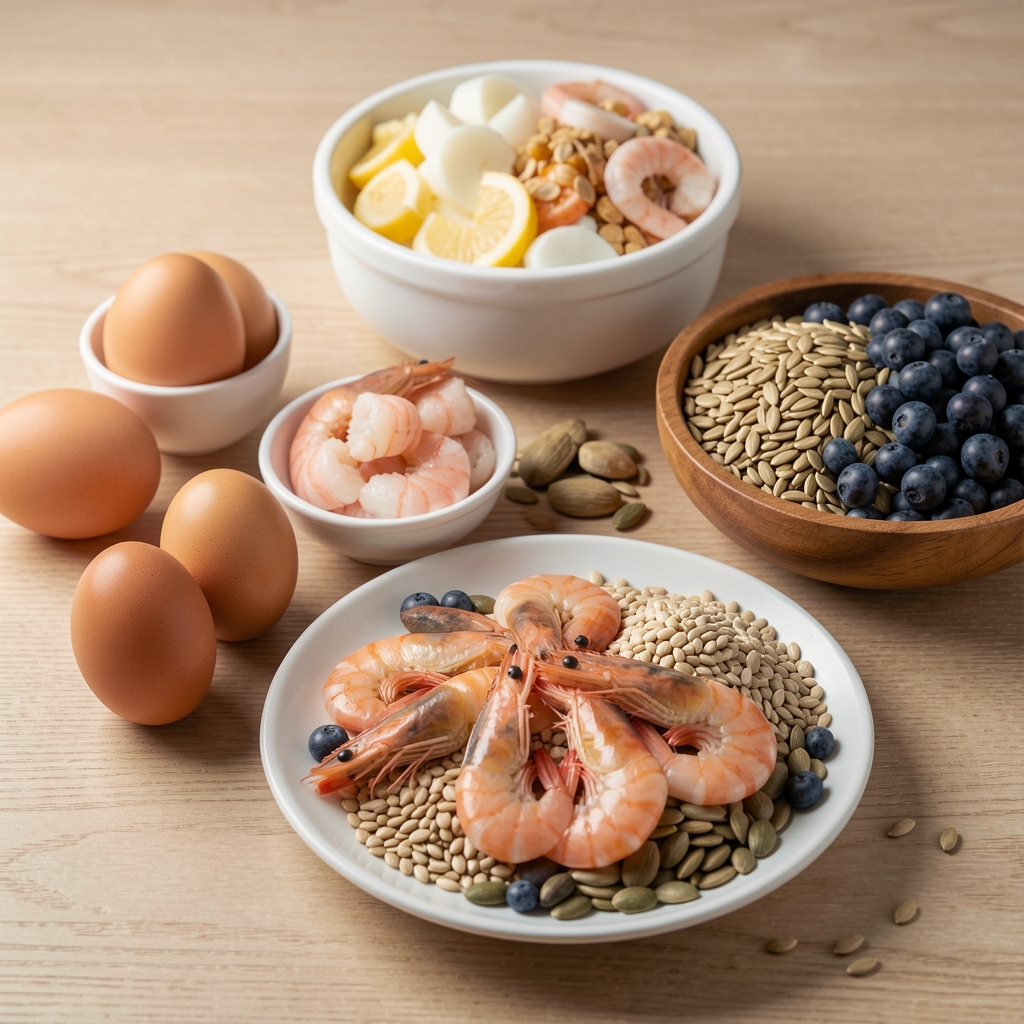
Selenium is a trace nutrient, but a trace does not mean a narrow story. Its food sources sit across seafood, eggs, grains and seeds, making it a useful lens for discussing variety in a daily men's nutrition routine.
The scale of a small nutrient
Readers often encounter selenium on a label before they notice it in a meal. The first editorial task is translation: what does the serving say, what food sources are familiar, and how does the ingredient fit inside the broader week? This approach keeps the discussion proportionate. A single nutrient can be described accurately without placing it above the complete food pattern it sits within.
Food sources in focus
Seafood and eggs are recognisable parts of many Indonesian food patterns. Grains, seeds and other foods add further variety. The exact mix changes by household, budget, season and preference, which is why a rigid daily script rarely captures real life. For selenium men Jakarta readers, the city's markets provide a practical backdrop: fresh foods, packaged choices, shared meals and busy schedules all meet in the same week.
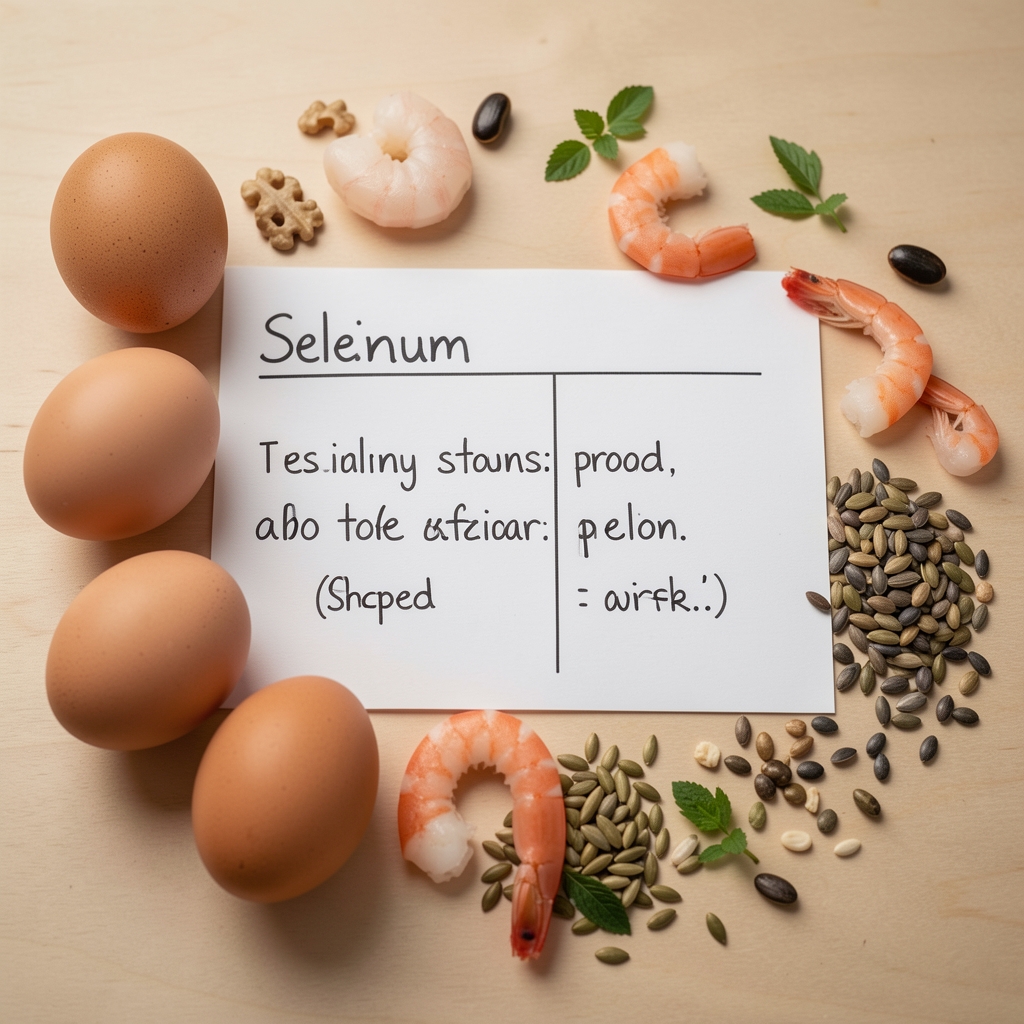
Featured food categories
Seafood and fish
A recurring source across published food composition tables, and a familiar category in many Jakarta households already eating fish regularly.
Eggs
An everyday, versatile food that appears across breakfast and dinner patterns alike, and a simple entry point for food-based variety.
Grains and seeds
A useful category for readers building variety beyond animal proteins, with different foods contributing different amounts depending on soil and preparation.
Reading a selenium label step by step
- Check the stated serving amount and note whether it is presented as a single ingredient or part of a combined formula.
- Look for any additional listed ingredients that might affect how the product is stored or taken.
- Compare the label against a rough mental picture of how often seafood, eggs or seeds already appear in a typical week.
- Keep the label for reference rather than relying on memory if a question comes up later.
Comparing common formats
| Format | Common context | Label detail worth checking |
|---|---|---|
| Whole food sources | Seafood, eggs, grains, seeds in regular meals | No label; variety judged by weekly pattern |
| Standalone supplement | Pharmacies, health shops, online retailers | Serving amount, form, suggested use |
| Multivitamin-style formula | General wellness shelves | Full ingredient list, relative proportions |
- Selenium's presence in food varies by region and soil, which published composition tables generally note as a caveat rather than a fixed number.
- A varied weekly diet is a more reliable frame for thinking about trace nutrients than any single meal.
- Supplement labels describe a packaged product, not a personal outcome, and should be read with that distinction in mind.
Questions readers ask
Is more selenium always better?
This feature does not make that claim, and public food composition guidance generally frames trace nutrients in terms of balance rather than maximisation. A varied diet remains the more useful reference point than any single serving figure.
Why focus on seafood and eggs specifically?
Because they are recognisable, commonly eaten foods in many Jakarta households, which makes them a practical starting point for readers thinking about food variety rather than starting from a supplement label alone.
Does this article recommend a specific product?
No. Ralen Journal does not endorse or rank individual products in any feature, including this one.
"A trace nutrient still deserves a full sentence. Reducing it to a single number on a label skips over how much the rest of the week already contributes." — Ralen Journal editorial desk
Closing thought
Selenium's story is really a story about variety: seafood one day, eggs another, grains and seeds filling in the rest of the week. A label can describe one product clearly, but it is the whole week, read together, that gives the ingredient its proper context.