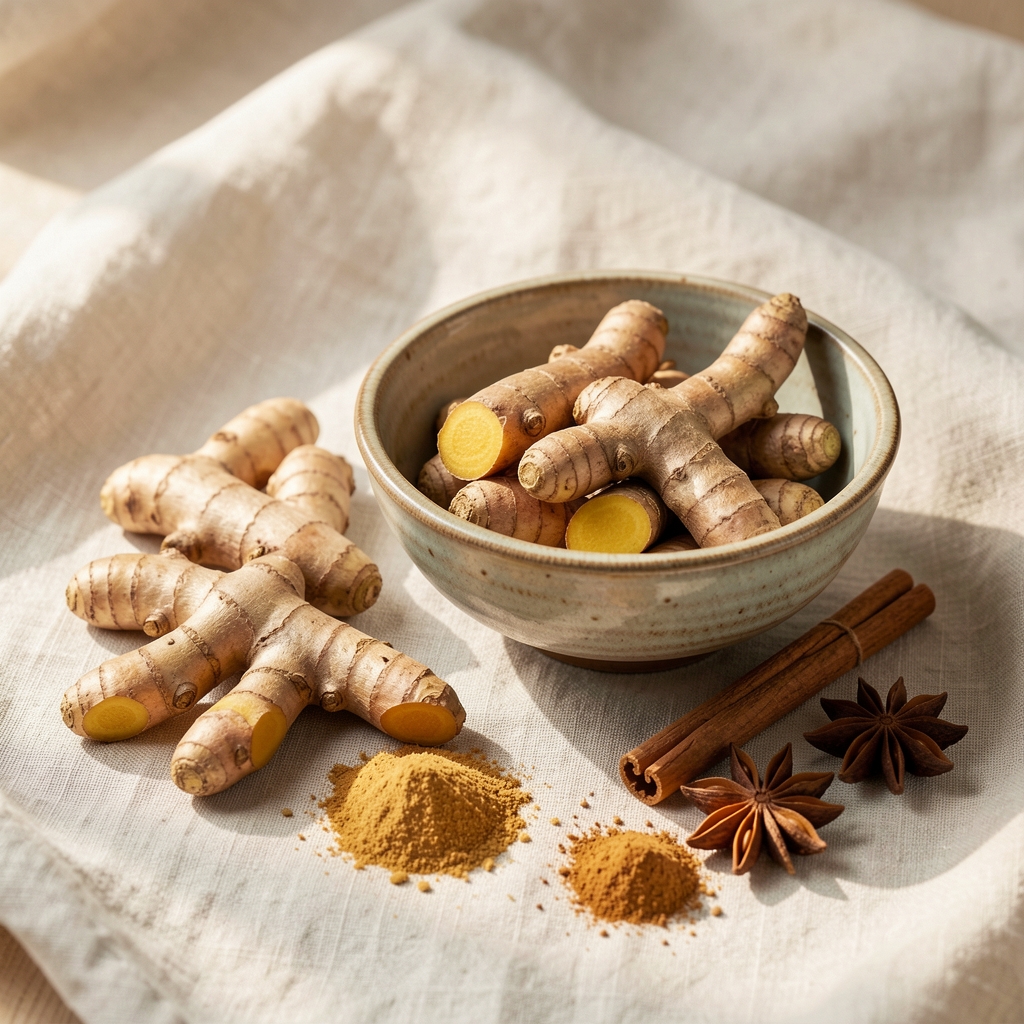
Turmeric belongs first to the kitchen: bright root, warm aroma and a place in familiar Indonesian dishes. The supplement label is a newer layer, and it deserves to be read with the same attention given to food, serving context and routine.
A root with a local vocabulary
In Jakarta kitchens, turmeric may appear in rice, soups, marinades and spice pastes. That culinary identity provides an important frame for turmeric supplement men discussions. The ingredient has a history that is larger than a product jar, and treating it only as a supplement category tends to flatten that history into something narrower than it actually is.
Editorial writing should preserve that context. It should also describe the format, serving information and additional ingredients clearly, without turning a kitchen staple into a dramatic claim about what a capsule can achieve compared to a spoonful of fresh root used in cooking.
Routine and variety
A daily supplement routine Jakarta reader may already have a dependable breakfast or evening meal. Connecting an ingredient note to that existing pattern can make the record more practical than inventing a new habit from nothing. The meal remains the foundation; the label is a detail within it, not a replacement for it.
Food variety also matters. Vegetables, legumes, grains, eggs and fish all bring different textures and flavours to a week, and turmeric's place in that week is usually as a background note in a dish rather than a headline ingredient. Supplement formats change that balance slightly, which is worth naming plainly rather than glossing over.
From spice rack to supplement shelf
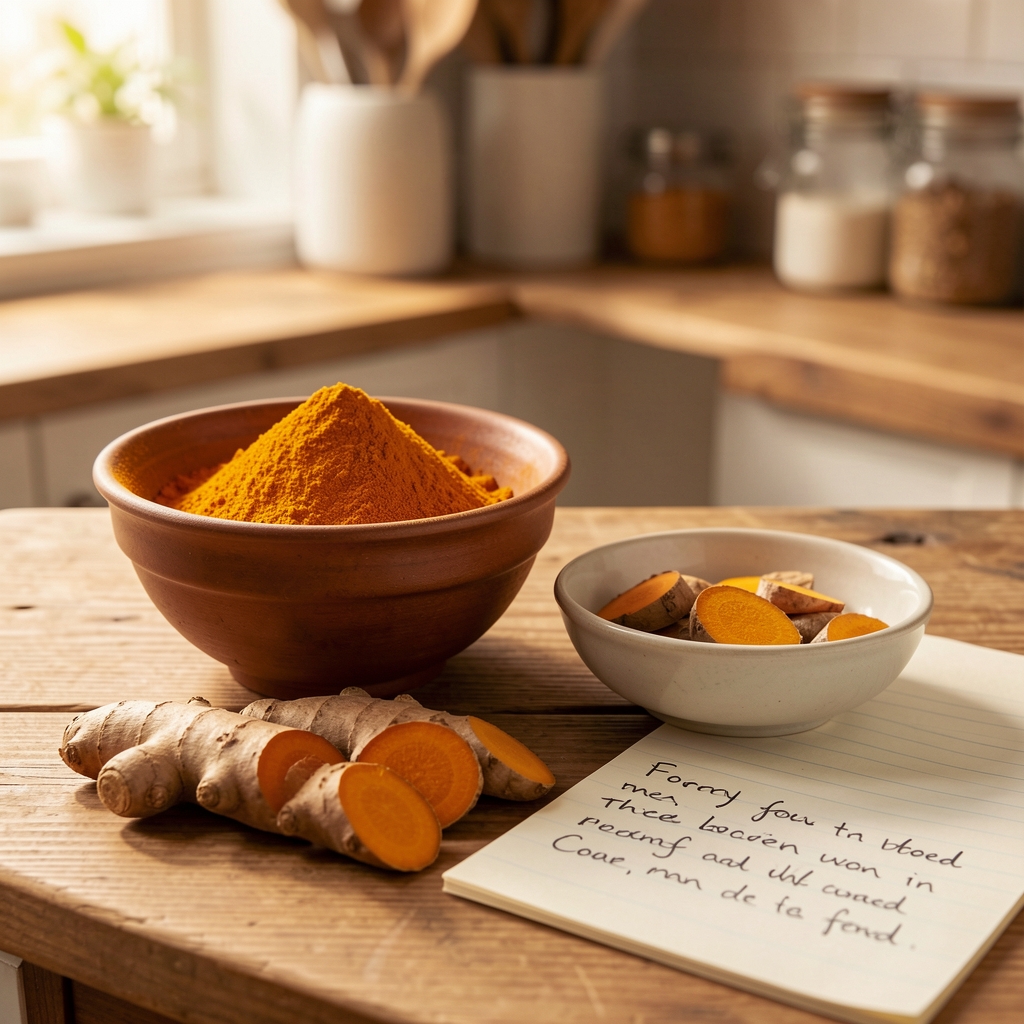
The move from kitchen spice to packaged supplement changes how an ingredient is measured and described. A cook estimates by eye; a label states an exact serving. Reading both together, rather than treating them as unrelated, gives a more complete picture of how much turmeric a person actually encounters across a week of home cooking plus any supplement use.
Formats found in Jakarta markets
| Format | Where it typically appears | Label detail worth checking |
|---|---|---|
| Fresh root | Wet markets, grocery produce sections | No label; freshness and storage judged by appearance |
| Dried powder spice | Grocery spice aisles | Packaging date, origin, any additive listed |
| Standalone capsule supplement | Pharmacies, health shops, online retailers | Serving amount, additional ingredients, suggested use |
| Combined formula supplement | Health shops, online retailers | Full ingredient list and relative proportions |
A short weekly checklist
- Note how often turmeric already appears in home cooking before adding a separate supplement to the routine.
- Read the full ingredient list on any packaged product, since combined formulas often include other spices or actives.
- Keep supplement storage separate from kitchen spice storage to avoid mixing use-by expectations.
- Record any change in routine in a simple note rather than relying on memory alone.
- Decide whether the goal is culinary variety, a labelled supplement routine, or both, since the reading habits differ slightly for each.
- Check the label of any packaged product for serving size and full ingredient list before the first use.
- Set a consistent point in the week to review the routine, rather than adjusting it daily based on how a single day felt.
Common questions about this feature
Does cooking with turmeric replace reading a supplement label?
No, they answer different questions. Cooking habits describe culinary use; a supplement label describes a packaged product's serving and ingredients. Both are useful, and this feature treats them as complementary rather than interchangeable.
Is a combined formula automatically better than a standalone one?
Not necessarily, and this feature does not rank formats against each other. The right choice depends on what a reader is already taking, their existing diet and their own reading of the full label.
"A spice rack does not need a marketing claim to be interesting. Reading it alongside a label just fills in the details a jar cannot show." — Ralen Journal editorial desk
Closing thought
Turmeric's place in an Indonesian kitchen is old and well established. A supplement label is a newer, narrower document that describes one product among many ways the root reaches a plate. Reading both with equal care is the most useful habit this feature can offer.